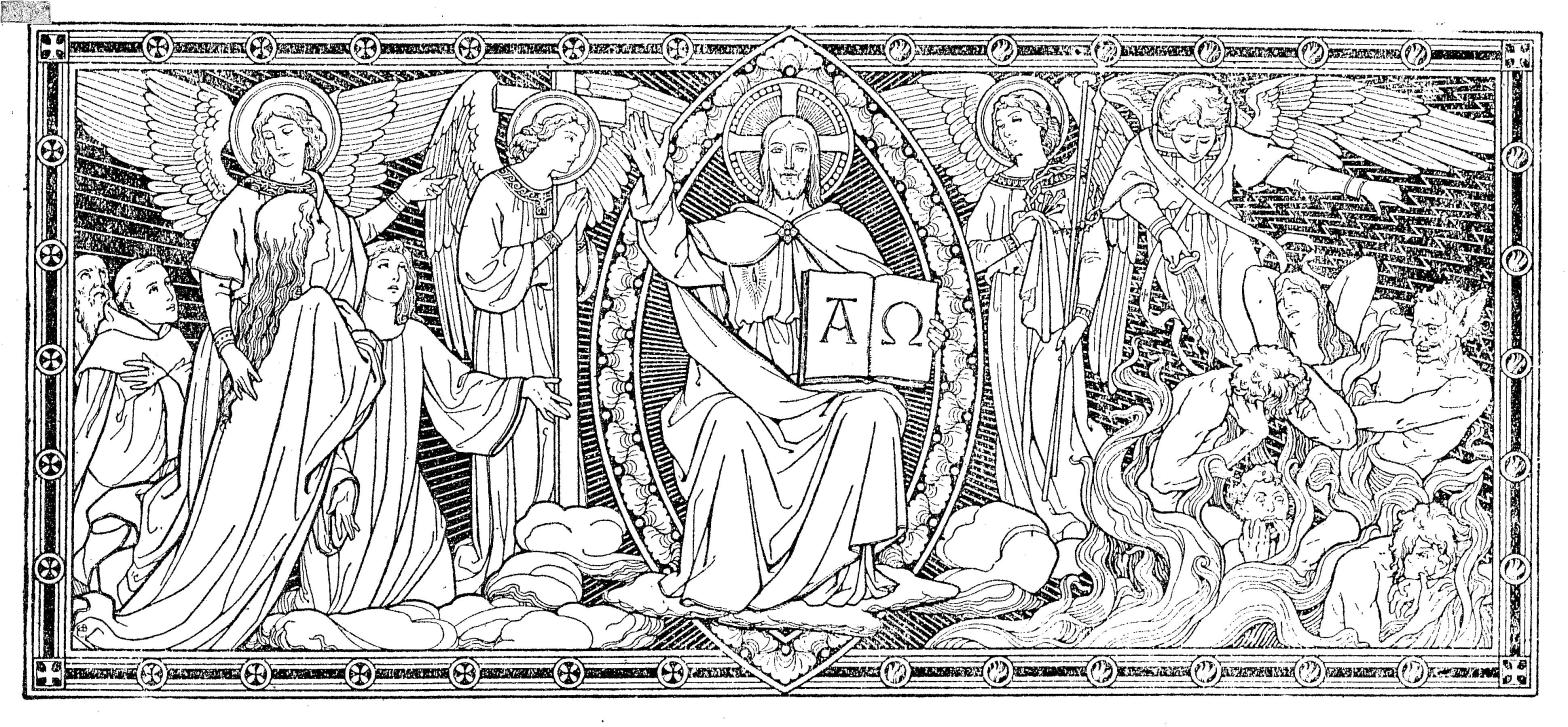
Feast of the Transfiguration of the Lord, Year A
Previous Years: 2017 (Feast of the Transfiguration); 2019, 2020, 2022 (2nd Sunday of Lent)
Preached at the Church of the Assumption in Bellingham, WA
Recording
https://moorejesus.podbean.com/e/the-authority-of-jesus-1691366644/
Transcription
Thanks to an Assumption parishioner for editing this transcription.
I’d like to start by explaining our first reading. We have a selection from the Book of the Prophet Daniel and parts of this book, just like parts of the Book of Ezekiel and all of the Book of Revelation, are apocalyptic literature. Apocalyptic has come in our minds to mean end of the world, but that’s not true to the original meaning of the word. The Apocalypse of John is the Greek word for the revelation of John. Etymologically, revelation is a revealing and so apocalyptic. Apocalyptic literature attempts to reveal hidden truths, and they do so by using symbolic language. If you are Daniel and you are having a vision of heaven, how can you possibly articulate or explain what you have seen? It’s too much. It’s too overwhelming. There are no human words to describe it. And so, apocalyptic literature uses the best symbols it can to reflect a hidden reality.
Here Daniel is having a vision of heaven, and he begins by telling us about the Ancient One. You would only call somebody the Ancient One if it is the One who is more ancient than everything else, so what we’re talking about here is the Creator, the One who came before all other things. So, we have the Creator, and then His clothing was bright as snow. In the ancient world, they didn’t pave their streets; it was a rather dusty affair. Consequently, your clothing would be dirty all the time, your feet would be dirty and everything else would be dirty. Anything, particularly clothing, that is snow white is purified, it’s cleansed, it’s clean. So, the Ancient One is pure; He is holy. The hair on His head is as white as wool. The idea being the whiter your hair gets, the wiser you are. So, we have the Creator who is holy and wise. And then Daniel describes His throne–the throne being the symbol of authority. He possesses in himself incredible authority. His throne was flames of fire. Fire is a very powerful symbol for all of humanity. We use it to great effect. It cooks our food. It keeps us warm in the winter. But if left unchecked, it will consume everything. It will burn entire cities. And so, the image of fire here is the image of power—a power that is helpful, that is necessary, but also, a fire that is barely under control, that if we are not careful will absolutely consume us. This is the perfect image for the power of God, because of course, His power is for our good, but it’s also the kind of power that should leave us in fear and trembling. The Ancient One sits on a throne of fire, sits on a throne of that barely contained power. If His throne is made of power, imagine just how powerful the Ancient One himself is. That throne also possesses wheels of burning fire. We see this in some of Ezekiel’s images. The angels have wheels. The wheels represent mobility, the ability to be present all the time, everywhere. And so, the Ancient One is the Creator who is holy and wise and powerful and omnipresent. He is everywhere, all the time. His throne can go anywhere. Under this throne is a surging stream of fire that flows out from where He sat. His power is not localized. His power is everywhere. It flows out from Him to everywhere. Thousands upon thousands were ministering to Him, and myriads upon myriads attended him. This is One who is influential, One who deserves, who demands the worship and the adoration of those around Him. And finally, Daniel says, the court was convened and the books were opened. Somebody who sits on a throne, who is impulsive, who just decides whatever he wants, whenever he wants, for whatever reason, that’s a dictator. That’s an autocrat. But if a court is convened and the books are opened, then every decision is deliberate. This leader works according to laws, according to a well-structured, organized society. And so, Daniel is giving us this image of God as best as he can with these symbols. He is telling us that the Ancient One, the Creator of the universe, the One who came before all other things, this Ancient One is wise. This Ancient One is holy. He is omnipresent. He is omnipotent, all powerful. He demands the adoration and the worship of those around him, and He works deliberately in an organized and ordered manner. This is the God that we worship. This is the God of heaven and earth. This is the God that Daniel is giving to us, that all of the scriptures give to us in one way or another.
But then something very interesting happens: As the visions during the night continued, I saw: one like a Son of man. That’s an interesting circumlocution. Son of man simply means a human being, one who inherits humanity from his father, a son of man. But it is interesting that Daniel says, one like a Son of man. He is seeing somebody with a human nature, but there is also something else about this person, something more transcendent, something more elevated. As the visions during the night continued, I saw: one like a Son of man coming on the clouds of heaven. People misinterpret this reading all the time. They think Daniel is seeing one like a son of Man coming down from heaven—but not in this vision. In this one, one like a Son of man is ascending on the clouds of heaven. We have here, 500 years before the birth of Jesus, a prophecy of the Ascension, where Jesus Christ—one like a Son of man, one who has a human nature but is transcendent—ascends on the clouds of heaven. In the account of the Ascension, we have the clouds hiding Jesus from the sight of the apostles. These are the clouds of heaven bringing Him into the presence of the Ancient One. What happens at the moment of the Ascension, when He reached the Ancient One and was presented before Him? The one like a Son of Man received dominion, glory, and kingship. Imagine here, a medieval heraldic epic where you have the king, and one of his knights, or maybe even his son, comes to him with a victory. Father, Lord, my king, I have won the victory over our enemies. I have conquered the foe. We are victorious. And the king, in response, awards him with land and title and power and riches. That’s what we are seeing here. One like a Son of man being presented to the Ancient One. He is presenting some kind of victory. It is not described here; Daniel may not have even understood what that was. But as Christians, of course, we know the answer. Jesus won the victory over sin and death—the last final enemies of humanity, the ones that no one else can conquer. Jesus comes into the presence of His Father and says: Father, Lord, God, King, I have conquered sin and death. I present to you the final victory. And so, His Father gives Him dominion, glory and kingship.
Again, that word glory is so interesting in the Old Testament, generally reserved to God Himself. And so, if glory is given to one like a Son of Man, then divinity—a share in godliness—is given to the Son of Man, and then, of course, dominion, glory and kingship. All peoples, nations and languages serve him. His dominion is an everlasting dominion that shall not be taken away. His kingship shall not be destroyed. It is not just some lands, some glory, some kingship. It is over all peoples, nations and languages. He is the King of the entire creation, of the entire earth, of all peoples; and His dominion will be forever. It is an eternal dominion. He has won the victory over the final enemy of humanity. And so, without any more enemies, His kingship is eternal. The Eternal Father, the Ancient One, who is holy and wise, omnipotent, omnipresent, worshiped by all around Him, orderly and deliberate—this One has given to the Son, given to Jesus all of His authority, all of His power, all of His kingship. This is the One that we worship. This is the God that we follow. This is Jesus Christ whom we adore. The One who has the full authority of His Father in heaven. The One who has been given all peoples, nations, and languages.
But how do we know Daniel has this prophecy? That he has this vision? How do we know that we are supposed to follow Jesus? That Jesus is, in fact, the One who has been given this authority? Well, this glory, this authority is communicated to Peter, James and John on Mount Tabor at the Transfiguration. Everything around this event is a symbol of the glory and presence of God. First, Jesus is on a mountain. Mountains are very important in the Old Testament. It is on a mountain that Moses conversed with God and on which God gave him the law. It is on a mountain that Elijah called down fire from heaven against the prophets of Baal; on a mountain that Elijah experienced the presence of God. And so, Jesus on a mountain is quoting with His actions all of these great events of the Old Testament. When He gets there—in case there was any question about the meaning of the mountain—Moses and Elijah, these two who had these incredible experiences on a mountain, appear to him. Interesting side note, Moses and Elijah are the only two to receive the presence of God in the Old Testament, and even there they can only see the back of God, because if they saw His face, they would die. But now that God has taken upon himself a human nature, they can converse with God face-to-face. These two who desired that in their lifetime, have it fulfilled in the lifetime of Jesus on Mount Tabor. So, on the mountain, Peter, James, and John see Moses who represents the law, and Elijah representing the prophets. They are showing us that Jesus is at least their equal; He is at least a prophet equal to Moses and Elijah. They are conversing with Him, and Jesus is transfigured. He shines with the glory of God. We only hear about that happening to Moses after he conversed with God, and that was clearly a reflection of his conversations with God—it faded over time. Jesus shows from within himself the glory of God, just as Moses had, but somehow more resplendent, more internal, more coming from His own self.
Peter gets distracted, note this idea of setting up tents. If Jesus is up there to talk to Elijah and Moses, why would He want to go to His own tent and like hang out separately? Just let the guy have His conversation. But Peter doesn’t know what to do, freaks out, and inserts himself into the conversation. The Father from heaven is like he doesn’t get it, maybe I need to be clearer. So, a cloud shows up again. Clouds in the Old Testament are very important. It is in a cloud that God accompanies his people through the desert. It is in a cloud that God descends upon the temple after it’s consecrated, the Shekinah, the presence of God in the temple. And so, when we have a bright cloud showing up on this mountain with Moses and Elijah and a transfigured Jesus, every Jewish bone in their bodies should be screaming, this is the presence of God. And what does God say? This is my beloved Son, with whom I am well pleased; listen to him. The authority given to the Son by the Father is communicated to Saint Peter directly, by the presence of God in a cloud. Every symbol the Old Testament can throw at Peter is yelling, listen to this guy! This Jesus is the One to whom I have given My authority. I, the Ancient One, who is holy and wise, omnipotent, omnipresent, worshipped by all around Him, deliberate and ordered, I have given my authority to Jesus. Listen to Him.
Jesus does something very interesting at the end as they are coming down the mountain. He says, Do not tell the vision to anyone until the Son of Man has been raised from the dead. As though all of the symbols I’ve talked about, as though the prophecy of Daniel, which everybody in this story would have known, as though none of this, none of this was enough, Jesus has one more sign of His authority, and that is His resurrection from the dead. There is no doubt after the resurrection that Jesus possesses the authority of God. He has won his victory over sin and death, and nobody but God has authority over life and death. If Jesus conquers death, Jesus has the authority of the Father. Once He is risen from the dead, everything that Peter, James, and John have witnessed is confirmed 10, 20, 100 times over through the resurrection. It is absolute.
Now we are not Peter, James and John. Somehow the authority of the Son has to be communicated to us, and that’s why we have the second letter of Saint Peter. He begins in an interesting way. We did not follow cleverly devised myths when we made known to you the power and coming of our Lord Jesus Christ. How many times have we heard from the new atheists, from those who are trying to tear down religion, that Jesus is a myth? That He is cleverly constructed, that He gives us a lot of moral statements, but there is nothing in Him to worship. He is at best just a man and at worst an invention of our overactive imaginations. Saint Peter himself dealt with these people. He wrote a letter condemning the idea that Jesus is just a myth. Saint Peter himself reminds us that he is an eyewitness to these events. He says in a letter written by him that he witnessed on the mountain God the Father, saying, This is my Son, my beloved, with whom I am well pleased. The authority of Jesus is not questionable. God himself has confirmed that authority again and again and again, and God himself has given us eyewitnesses to convey to us the authority of the Son. Those eyewitnesses communicated their message to other witnesses, and through the apostles and their successors, the bishops, we have received the unbroken testimony of the authority of Jesus Christ, the unbroken testimony of His resurrection from the dead. The unbroken testimony that the Ancient One—who is holy and wise, omnipotent, omnipresent, who is worshipped by all around Him, who is ordered and deliberate—has given His authority to His Son Jesus Christ, whom we worship in this Church today. And just to finish up his message, Saint Peter says, We ourselves heard this voice come from heaven. Moreover, we possess the prophetic message that is altogether reliable. You will do well to be attentive to it as a lamp shining in a dark place, until the day dawns and the morning star rises in your hearts. This message from the apostles is for you. We, the Church, under the authority of Jesus Christ, who communicated His authority to his apostles, we possess the prophetic message which is altogether reliable, and we would do well to be attentive to it. The message of the Church, the gospel preserved by the apostles, is a lamp shining in a dark place, a lamp that we desperately need.
 Fr. Moore
Father Moore, are you aware th