2nd Sunday of Advent, Year B
Preached at the Church of the Assumption in Bellingham, WA
Recording
https://moorejesus.podbean.com/e/invest-in-what-is-eternal
Transcript
Even though it’s been almost two years since we sold them, I still think a lot about those houses that we used to own over on Ellis Street. Just for some historical context, we bought six houses just across the street from our parking lot between 1998 and 2000. This was a period where the parish was planning for growth. We did a big study, and we saw that Bellingham was likely going to explode in growth—which was something that happened. Bellingham did grow at the rate we thought it was going to, and then we assumed that the church would grow at the same rate as Bellingham did. But the last 25 years have not been great for religion, so we didn’t grow. We stagnated, and we shrank pretty significantly. We bought those houses to expand our campus in a period of growth, but we never grew. We thought we were going to have 3,000 people on a weekend, and we thought we needed to expand our parking lot. We needed to make room for more cars. When we realized that we weren’t going to expand our parking lot, we still couldn’t get out of our head that these houses were not long for this world, that their destiny was simply to be destroyed, to be pushed over—and we made decisions accordingly. We rented them out, but we made only the necessary repairs to pass inspection (like they had working furnaces and water normally didn’t get into the houses). Then when 2119 Ellis Street had a mold problem, we didn’t fix it. We just demolished the house because, in our minds, the houses existed to be destroyed. They existed to be pushed over so we could build something else there later (which was a great disappointment to me because having sold the houses, we lost like $150,000 on that transaction because we didn’t have a house there). But that’s fine. I don’t think about it all the time. Not every day. It’s fine.
I give this to you as an analogy for our second reading. Saint Peter says something really striking. He says, but the day of the Lord will come like a thief, and then the heavens will pass away with a mighty roar, and the elements will be dissolved by fire, and the earth and everything done on it will be found out. Saint Peter says that the destiny of our world, the destiny of everything we can see and touch and feel, is to be destroyed. So really, we ought to act toward this world as our parish acted toward those houses. It’s not something to obsess over. It’s not something really even to invest in. The only thing in this creation that is eternal is you. Only you are eternal. Flesh and blood will pass away. This world will pass away. The heavens and the earth will pass away. Only you will persist, which means that the only thing that matters is your soul. And because we are all eternal together, your relationships, your relationship with God, and your relationship with each other, those are the only things that will persist. It’s the only thing worth investing in. You can pour a lot of money and time and effort into all the other stuff, but its destiny is to be destroyed. So, what’s the point? What’s the point of accumulating things? What’s the point of living for this world if it’s all going to pass away?
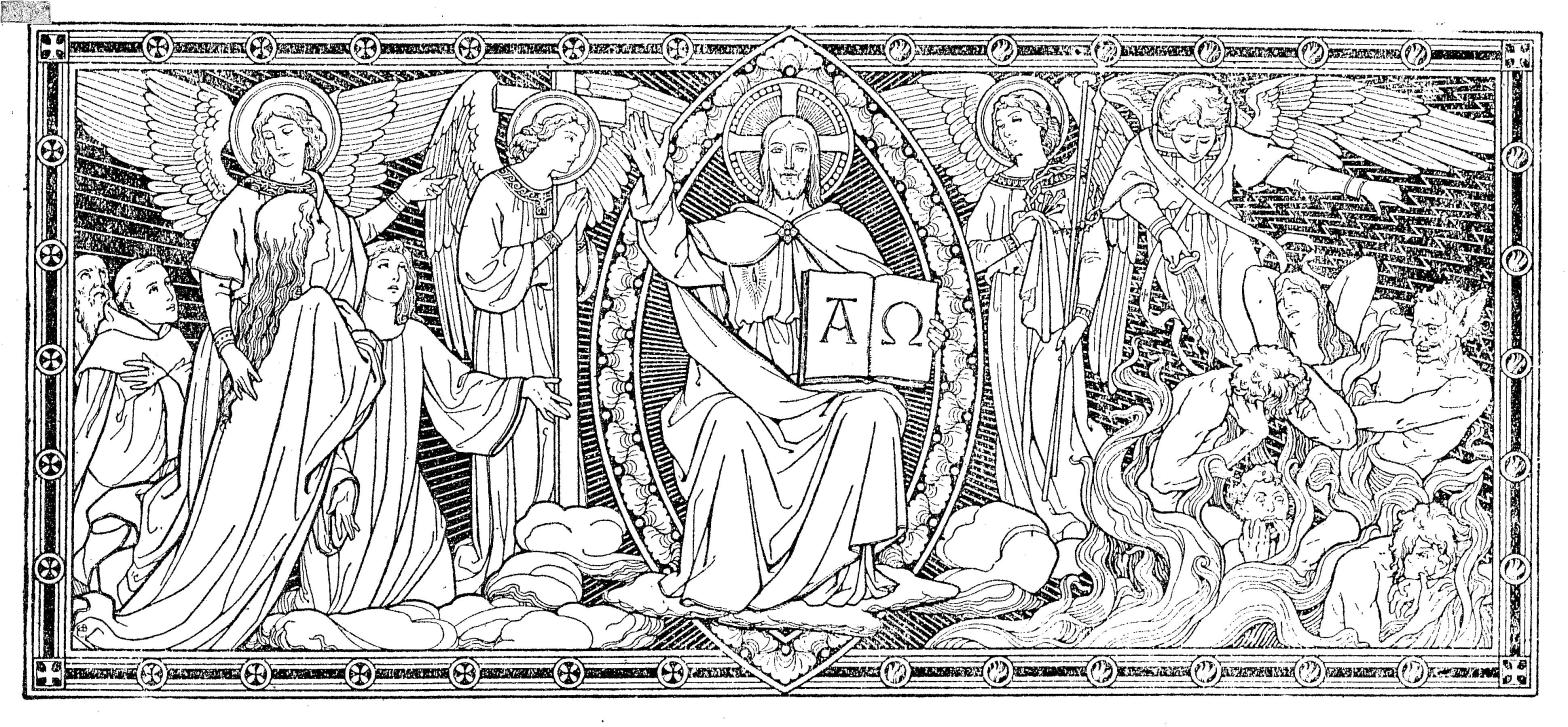
Saint Peter continues, since everything is to be dissolved in this way, what sort of persons ought you to be, conducting yourselves in holiness and devotion, waiting for and hastening the coming of the day of God, because of which the heavens will be dissolved in flames, and the elements melted by fire. We find ourselves in a weird spot as Christians because, particularly during Advent, we are constantly praying for the return of the Lord. Lord Jesus, we miss You. We want You here with us. Lord Jesus, we know that You ascended into heaven, that You are seated at the right hand of the Father, but please come back and take us and claim us. But as Saint Peter reminds us, it is through the day of God that the heavens will be dissolved in flames and the elements melted by fire. When we pray for the return of Jesus, we are praying for the destruction of this world, which seems a little morbid and aggressive. But we do so because we know, as Saint Peter finishes, according to his promise, we await new heavens and a new earth in which righteousness dwells.
We are praying for perfection. We know that the world we live in, honestly, like the houses we bought, is not in great shape. It needs a complete redo. This world is marked by sin. It is marked by death. It is marked by corruption. We do our best, and by the grace of God, we endure. We carry our crosses. We find moments of joy and thanksgiving. Absolutely. But we also know it is not up to our dignity. We know that this world is not what it ought to be. We pray for the coming of the Lord, including the destruction that comes with the coming of the Lord, because we know that that destruction is followed by a recreation, a new heavens and a new earth in their perfection, where all of our relationships are perfected, where we no longer carry the weight of sin. And so, particularly during Advent, our focus is on the new heavens and the new earth. It’s on what is eternal. It is on our souls, on our relationship with God, on our relationships with each other, on that which is eternal, on that which will actually fulfill the desire of our hearts. Our focus is not on this world. We, as Christians, have to practice something called detachment, a willingness to give up this world and the things of this world. Because if we put our hearts on that which is passing away, we will always be disappointed. If we want happiness and fulfillment, we have to put our hearts on that which is eternal.
 Fr. Moore