14th Sunday in Ordinary Time, Year C
Preached at the Church of the Assumption in Bellingham, WA
Previous Years: 2022 || 2019 || 2016
Recording
https://moorejesus.podbean.com/e/the-church-is-not-abandoned/
Transcript
The happiest day of my life was my diaconate ordination. In high school, I fell in love with the Church. I loved everything that she stood for. I loved her wisdom. I loved her history. I just loved the Church. By the time I got to diaconate ordination, that’s when I got to make my promises to give my entire life, the rest of my life, to the Church. It is, in a very direct way, analogous to marriage vows. In marriage vows, people give their entire lives to each other. That’s what I did at my diaconate ordination. I made marriage vows to the Church. And as many of you would identify your wedding as one of the happiest days of your life, my marriage to the Church was the happiest day of my life.
So you can imagine that if the church is hurting, I am hurting. If my bride is in pain, that does not go well for me and I feel that deeply in my heart. I know that this year of Partners in the Gospel has been particularly difficult for all of us. That everything seems upended and chaotic. That everything that we thought was going to be fine, everything that had been working, it’s just not there anymore. We do have some things that we can still hold on to. And hopefully you have enough community with those in the pews that you can endure it. But priests running around all the time and not having the priests at different events and all of these changes we’re contemplating with Mass changes and even more stark changes in the future: It’s hard and it causes us to hurt.
So I’d point us to our first reading. Theologically, the Church is the new Jerusalem. The literal Jerusalem is the center of the worship of God in Judaism, the center of the chosen people of God. The place to which he calls all of his chosen people together multiple times a year for worship. That continues in the new dispensation, the New Testament, post-Christ. God chooses a people – that’s you – through baptism, and he calls those people together for his worship – that’s here in the Church. And so the Church is the new Jerusalem. What Isaiah says in our first reading is true in his time for the literal Jerusalem, but is prophetically true today for the Church.
And he says this: “Rejoice with Jerusalem and be glad because of her, all you who love her; exult, exult with her, all you who were mourning over her!” Jerusalem is under siege in the time of Isaiah. And so when he says, “all you who are mourning over her,” that’s everybody. They were all mourning and weeping for the future of Jerusalem. When we hear that prophetically, what we’re hearing is: if you are mourning over the Church, if you are struggling with what our future looks like, what our present looks like, then the message of Isaiah is rejoice and exalt.
Why? Because the message of Isaiah broadly, and his prophetic message for us today, is that God never abandons his people. If God chose you to be a member of his chosen people; If God called you together to worship him here, then why would he abandon you after that call? God does not abandon his people and God does not abandon his Church. And so even if we are mourning, and if even if we are struggling, our faith tells us that ultimately that mourning and struggle must turn into exaltation and joy because God does not abandon us. God will take care of us, and he will bless us with abundance. “Lo, I will spread prosperity over Jerusalem like a river, and the wealth of the nations like an overflowing torrent.” That’s a promise to you. That’s a promise to the Church of today that God will bless us with abundance.
Now we have to be careful because we don’t want to fall into Prosperity Gospel thinking. It’s an approach to Christianity that’s especially prevalent in the United States. Prosperity Gospel thinking says the more faithful you are to God in this life, the more you will prosper in this life. So if you just name it and claim it, then you can get whatever you want from God. And if you don’t get it, it means you’re not faithful. If you give a ton of money to the things of God, then your bank account should be overflowing. Unfortunately, my experience of Christianity tells me that that is not what God means when he talks about abundance.
Instead, he says this: “As nurslings, you shall be carried in her arms, and fondled in her lap; as a mother comforts her child, so will I comfort you; in Jerusalem you shall find your comfort.” The reason we’re struggling is because we want the Church to be a place of comfort. And change and chaos and everything being upended means that it’s not a comfortable place. But I want you to think about that analogy. When I think about my own mother and being comforted by my own mother, the deepest moments of comfort came when I was most struggling. They came when I was a little child and I skinned my knee, or they would come in middle school and high school when I was having emotional difficulties or an emotional crisis. That comfort comes not because we don’t have any struggles, not because there are not sacrifices, but exactly because there are struggles and sacrifices.
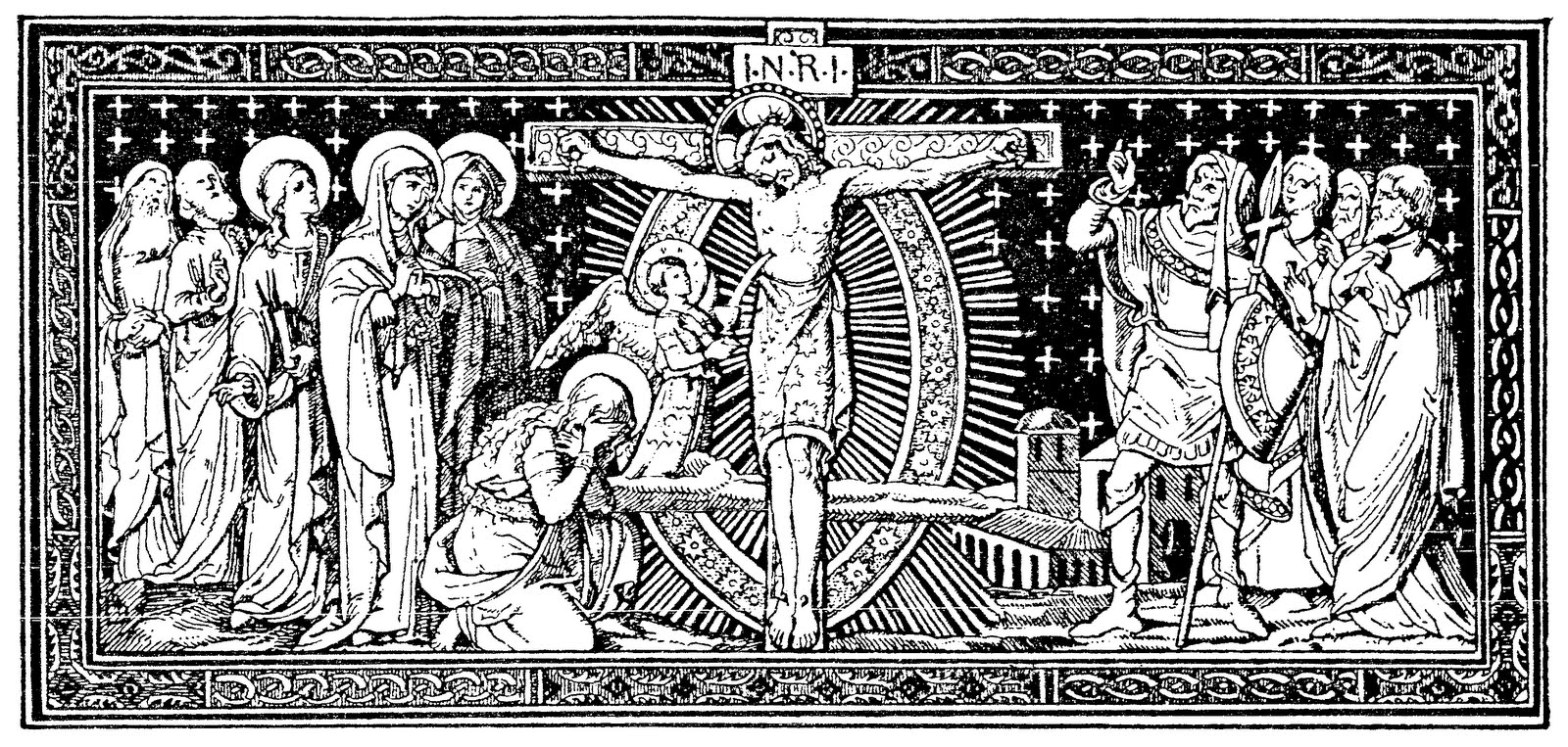
Saint Paul, in our second reading, says that he’s never going to boast except in the cross of our Lord Jesus Christ. His vision of an abundant Christianity is not a Christianity without struggle, and it is not a Christianity without sacrifice, but it is instead a Christianity that flows directly from the sacrifice of Jesus Christ.
Now, I want you to contextualize the statement from Saint Paul. He was writing this at a time when people were actively being crucified by the Romans. It would not have been foreign to him to walk into a major Roman city and have crucified people lined up along the main road into that city as a display of Roman power, and as a statement of what’s going to happen to any of those who defy the Romans. That is a terrifying thing to have to see on a regular basis. And yet he is boasting in his own potential crucifixion, his analogous crucifixion, through his different stonings and struggles, and he is boasting in the actual crucifixion of Jesus Christ. That is a crazy thing to do in this time. Why? Because he knows that salvation comes from the Cross, and he’s boasting in his salvation. If his and our salvation was won for us by the suffering of Jesus Christ, then our salvation is impossible without suffering and our salvation is impossible without sacrifice. And our salvation is impossible without discipline and struggle. And so St. Paul boasts in the discipline and the struggle and the sacrifice, because he knows that it is only there that we can glimpse Jesus and receive salvation.
So what does it mean? What does it mean for God to bless his Church with abundance? I, as the Pastor, would love that to mean a full bank account or full pews or programs that we just don’t even have enough space for all the people who are registering. I dream about that all the time. But when the rubber hits the road, I don’t believe that that’s what God means when he says that he is going to pour abundance on Jerusalem, on the Church, like a river. It is about saints, not about numbers. Meaning a flourishing church is a church full of people who are dedicated to the sacrifice of Jesus Christ, who by the grace of God are able to live that sacrifice out in their own lives and their own communities.
As an aside – when I’m sick, as I am today, I think a lot about sacrifice. But I’m particularly inspired by parents when I’m sick because when I’m sick, all I want to do is curl up in my bed and die. That’s all I want. And then I think of all the parents that I see on a regular basis and how when they’re sick, they don’t have that option. They still have to feed their children and get them ready for school or church. They still have to make sure the family is taken care of. That’s an incredible sacrifice. I don’t want to overlook the beauty of that sacrifice. That’s the kind of thing we’re talking about.
A church full of saints is a church full of people who understand the sacrifice of Jesus and live that sacrifice out in their daily lives and their families and their communities, in their workplaces, in their society. That’s what an abundant and flourishing church looks like. I don’t want 2000 people at Mass if they’re not dedicated to the Cross of Jesus Christ. I want 200 people who are dedicated to the Cross. That’s a flourishing and abundant church.
How do we get there? Two ways. First, we have to embrace our cross. We have to realize this life is not going to be comfortable for us, and we have to realize that God’s faithfulness to his people, the fact that he is never going to abandon us, is not judged by the comfort of our life. In our Gospel, Jesus says that he’s sending his disciples out as sheep among wolves. This world is marked by sin. This world is marked by a tendency to run from its Creator, to run from God. And so those of us who preach salvation, those of us who try to bring the world back to God, we will be opposed and we will be hated. And from time to time we will be crucified. Jesus didn’t go to the cross because he wanted to. He went to the cross because the forces of his day, the leaders of the Romans and the leaders of the Jews, opposed his message and put him there. And if we follow Jesus, we should expect the same for us.
So step one for a flourishing Church is that we have to embrace the Cross. We have to embrace that salvation comes from sacrifice. That suffering will be part of our Christian time, our Christian expression. Not because God doesn’t love us, not because God isn’t going to bless us, but it’s in fact through the suffering that God blesses us. Those of us who have seen it, and I’ve seen it, and I’m sure many of you have seen it – we know that when God is present, the suffering doesn’t even feel like suffering anymore. It feels like salvation. And that’s exactly the point.
Second, we have to take seriously what Jesus does in the Gospel. He sends out 72. Now, these 72 are not the Apostles. It specifically says here “at that time the Lord appointed 72 others.” Other than the Apostles. These are disciples. So the priests and the bishops are successors to the Apostles. You are the successors to the disciples. He’s sending you out. This Gospel is for you. And what does he do? Well, he sends them out. He says “carry no money bag, no sack, no sandals and greet no one along the way.” That is a very hard ask. He sends them with no resources, trusting fully in the providence of God. In order for us to flourish, in order for us to see and rely on the providence of God, to see his abundance and how he is going to bless us, we have to leave behind those things that encumber us.
In Partners in the Gospel, those are three things. It’s the idol of building. It’s the idol of Mass time, and it’s the idol of priests. What we want, what we believe, is that I will only be comforted if I can continue to go to Mass at the same place, at the same time, with the same guy every weekend. That’s what we believe and that severely limits us. We cannot be blessed if we hold too tightly to that. We have to believe that God will not abandon his people, that God has not abandoned his people. But we have to look for him where he can be found. And if we look too hard at our idols, and if we look too hard at the things that encumber us, then we will not see how the Lord is blessing us today. We have to leave it behind so that we are free, so that we are open. We are fully dependent on God, and we must allow him to bless us as he sees fit.
My friends, the unfortunate reality is that I cannot promise you that things are going to get better. In fact, I am absolutely convinced that they are going to get worse. However, even though I can’t promise you that the institutional expression of the Church is going to get better, I can promise you that God does not abandon his people. That you can exalt and rejoice with Jerusalem, with the Church, because God is present to us. God is constantly blessing us. You might find him in your families and your friends. In your community. You might find him in your own small sacrifices or large sacrifices. You might find him in a Bible study. You may still find him here at this Mass. God allow that our faith would be deep enough that we would come only for the Eucharist, no matter what the Sunday experience is like. But my promise to you is that you will find the Lord. If you look for him, you will find him because he has not abandoned you, and he has not and will not abandon us.
 Fr. Moore