Solemnity of All Saints, 2023
Previous Years: 2022 || 2020 || 2018 || 2017
Preached at the Church of the Assumption in Bellingham, WA
Recording
https://moorejesus.podbean.com/e/the-saints-know-you/
Transcript
Every year I give $220 to the Mormon church—not because I want to support the Mormon church or because I particularly believe in their ministry, but because they own Ancestry.com. I keep paying that membership every year without fail, because I, like so many Americans, have this fascination with ancestry and genealogy. And I think it’s part and parcel of the American experience; you end up in a melting pot, and you feel melted away. You feel disconnected from anything substantial, historical, transcendental. There is a reason why even people who are 4 or 5 generations out of Ireland will have Saint Patrick and a shamrock up in their house somewhere. Or why, if you’re from the Netherlands, maybe you have a pair of wooden shoes in your house. My family had both of those things. It’s because you want to feel connected to something greater than yourself, and all of these other countries, these European countries, these Asian countries, these African countries, they have depth and they have history and they have stories. So, when I say I’m American, I’m kind of blended in with everybody else. But when I say, well, my family comes from Ireland and the Netherlands and Germany—and those are just the ones buried here in Whatcom County—it connects me to something deeper, something greater, something beyond myself, beyond just living memory. It roots me in something that feels profound. All of us have that desire to be part of something greater than ourselves, and family is a good way to find it. Ancestry is a good way to find it.
But we are Catholic, and there is something so much greater than ancestry and ethnicity here—what we are part of is worldwide. It covers not just one country, not just one culture; it covers the entire world and every era. We can trace ourselves back 2,000 years with Peter alone, and then we inherit from Judaism and we can go back another 2,000 years. We can go back 4,000 years. In our scriptures, we have the story of the first people and of the first things that happen on earth. We go back all the way to the beginning, and God has been working with our people from the beginning. God has been calling us from the beginning, and by uniting ourselves to this history of faith, this history of the people of God, we are part of the greatest story ever told, the most profound family you can be part of.
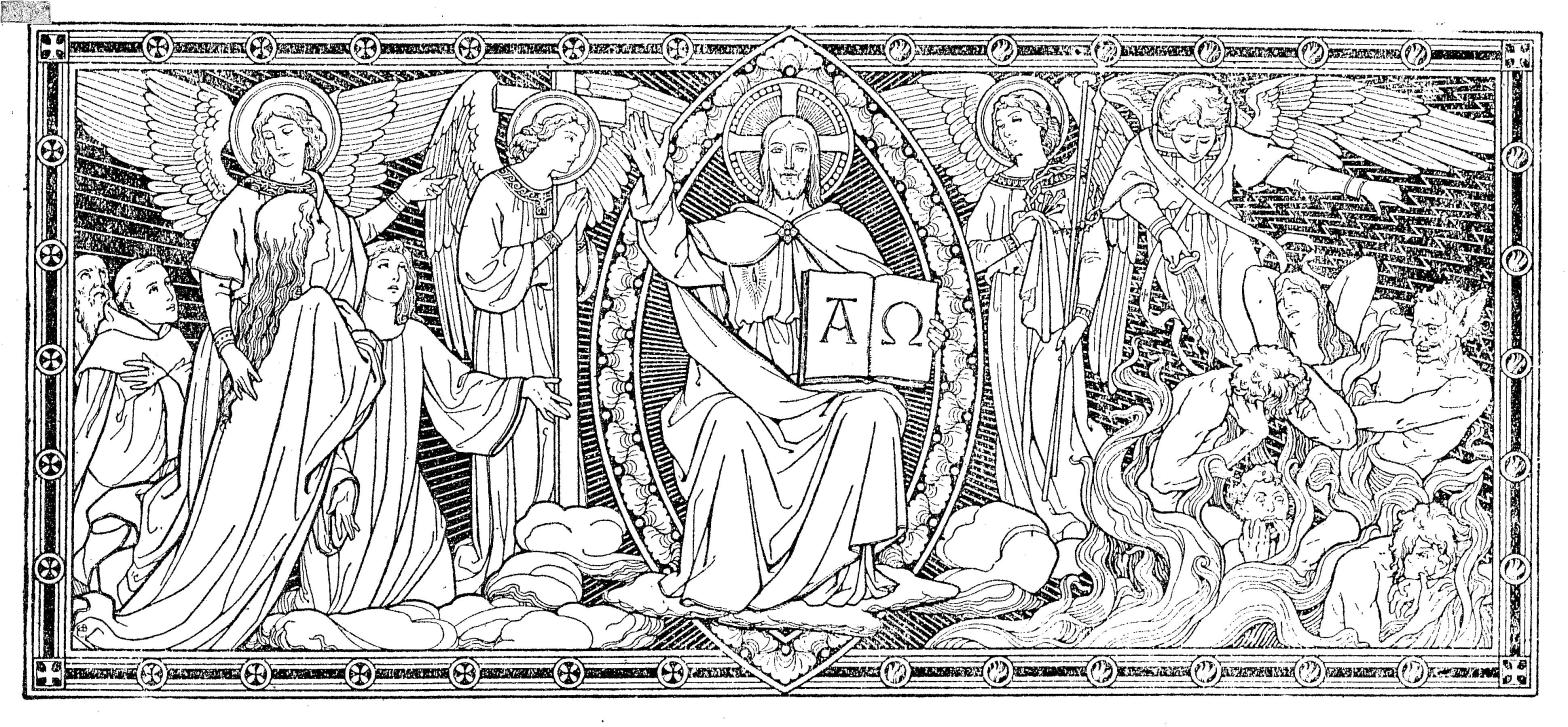
The Saints help us with that connection. They help us realize that we are something greater than ourselves. We are part of something greater than ourselves. When I think about the theology I had to study in seminary, and reading documents, and reading the Bible, I think about the fact that Saint Thomas Aquinas read the same Bible. Saint Augustine was converted by the same Bible. These two guys—the brightest minds that that generation had to offer—they were reading the same things that I’m reading. Both of them were praying to the same God, Jesus Christ. And so, to see these great heroes and these great figures in our faith who have the same faith, who prayed the same prayers, who united themselves to the same Petrine ministry, it reminds me that I have this personal and deep connection to something greater than myself. Sure, if I go back through the German heritage or the Irish heritage, at some point I might reach a general somewhere or some kind of figure. Everybody likes to trace themselves to royalty, and family trees are broad enough that everybody probably has some connection to royalty enough generations back. But it’s so much greater to connect myself to somebody who was holy, who lived the perfect life—or not the perfect life, but through Jesus Christ was made perfect by the end of their life. Connecting myself to somebody who was able to see behind the veil into the mysteries of God, who as a human being was able to live in a way that was truly heroic and transcendental is way more fun than whatever the Mormon church can give me.
The other thing to remember about the saints is that they are a living presence in our lives. Again, connecting myself through Ancestry is fun, and like I mentioned, I have great, great, great grandparents buried here in Whatcom County. They came to Ferndale, and they’re the first immigrants in that branch of the family. I’ll visit their graves; I’ll pray for their souls—and tomorrow, November 2nd, is a special day to pray for their souls. But the saints are named by the Church specifically as intercessors, which means that the saints know your name. They know who you are. They know what you need, and they are bringing all of your needs to the Father because they know Him personally. We don’t celebrate the saints just because their stories are fascinating, just because their lives are inspirational. We celebrate the saints today because we need their prayers and because they are praying for us every day of our lives, and we need at least one day to thank them for that. The fact that they would spend their eternity in the presence of God thinking about me is ludicrous. I’m not worthy of their thoughts or their attention. It’s humbling to think that Augustine and Aquinas both know my name, that Catherine of Siena has prayed for my needs. But they have. That’s what they do. You are connected to a living tradition. These heroes of our faith are active in your individual lives. They look over you every day.
The final question we might ask is why? Why do they care about us? Why do they look after us? How can we even say that we are connected to them? Through baptism you are made children of God; baptism is an adoption. We use that phrase “children of God” so much that it loses its meaning, but you need to think in terms of an adoptive family. When somebody adopts a child that has incredible legal connotations; that child is now an equal member of that family. That child is on par with any biological children in the family with equal rights to the inheritance, to the property of the family. Adoption is a big thing. So, when we say that through baptism you are adopted into the family of God, we mean very seriously that you are children of God, co-heirs with the Son of God, co-heirs with Jesus Christ. The saints are also adopted into the family of God, which means the saints are truly not just analogically your siblings in the faith; they are your brothers and sisters in the family of God. The reason they know your name and they care about you and they pray for you, is because you are their little brothers and their little sisters—and that’s what older siblings do. As the younger siblings grow up, the older siblings try to look after them, try to lead them in the right direction. Sometimes have to intercede with their parents if their parents don’t quite get it. God always gets it, but the analogy holds pretty well. These saints are members of your family. The family of God, the family of faith. They take ownership of you. They are so happy to pray for you, and they are so happy that you are here today, asking again for their prayers so that they can continue to work for your good. They are so happy that you are here today praising God that He would include the saints in His providence, in His eternal plan, that they should be necessary somehow in the way He has ordained the Church. Praise God for the faith and praise God for the saints!
 Fr. Moore
1 Comment