Thanksgiving Day 2023
Preached at the Church of the Assumption in Bellingham, WA
Previous Years: 2022 || 2021 || 2020 || 2019 || 2018 || 2017
Recording
https://moorejesus.podbean.com/e/petition-and-thanksgiving/
Transcript
Thanks to J.Y. for editing this transcript.
In my experience, there are two primary ways in which people find themselves in a relationship with God. Not a cultural relationship or an inertial relationship like we might have if we are raised in the faith and just go along with it, but a personal relationship with Jesus Christ—a conversation with the Lord.
The first is sort of the “amazing grace” path. Somebody who feels absolutely overburdened by this world or by sin, or by their faults or by their failings, somebody like the lepers in the Gospel who are just so exiled, so apart from society, so in need of love and attention and healing, that they cry out to Jesus as He is walking past. This is a perfectly legitimate reason to go to God. We live in a world that is marked by sin and corruption. We live with ourselves knowing that we have a divided heart, that we struggle, that we fail, and we search around for any kind of solution to that problem. We struggle to say, who can save me from my sins? Who can save me from this problem? Who can save me from this burden? And we try a lot of different things. We try self-help books. We try professionals—who have their place and are necessary—but they can’t do everything. At the end of the day, only our Creator can help us. Only the One who went to the cross can save us. And so, we will come to God from that deep place of need, that deep place of desire.
But the other way people come to God—and really the way that relationship is solidified—is through thanksgiving. Ten lepers were cleansed. Ten men were so desperate and in need that they presented themselves to the Lord. One of them came back in thanksgiving. And the Lord reflects to that one, Stand up and go; your faith has saved you. Almost all of us, almost everybody in this world, has some experience of begging God in need. That’s why we have that phrase, “There are no atheists in foxholes.” When you are under persecution, when you are struggling, when you are overwhelmed, everybody needs to turn to something greater than themselves and beg for mercy and forgiveness. But when that mercy and forgiveness is granted, when we see that the One that we have begged can actually help us, that we can find salvation, and we can find blessing and hope, we have thanksgiving. When we know His presence, even in our sufferings, we have a profound thanksgiving, and that thanksgiving solidifies for us the reality of God. It solidifies for us that God knows us, and God loves us.
I had this experience my freshman year of high school. I did not have a good time in middle school. I was the smart kid in the class who wanted to do what the teacher wanted him to do, and so I was always labeled as teacher’s pet, and it was harder for me to make friends. It wasn’t good in middle school. But then I get to high school and suddenly I love my classes; I love my friends; I love my activities. It’s the best thing I could ever have imagined. And so, I found myself, for the first time in my life, truly and organically praying because I was so full of thanksgiving, and I didn’t know where to put it. I knew myself well enough, even at the age of 14, to know that it was not my efforts that brought about these blessings. I loved my parents, and they did an incredible job for me, and I would give thanks for them every day. But I also knew that it was a roll of the dice that I got the parents that I did, and that they were also imperfect people—that they did a great job, but not a perfect job. And so, I was looking around for where to put this emotion. It was overflowing out of me. I just I needed to give thanks. In fact, I was so happy—I think it was my freshman or sophomore year of high school—that I did that stupid thing you see in the movies where I just kind of leapt up in the air, and I broke one of my kitchen lights with my hand. I still have a scar from that. It’s a scar of thanksgiving. I was so happy and so thankful; I didn’t know where to put it. I could only give it to God because only the Lord could bring about that level of blessing. Only the Lord could fulfill me in such a way.
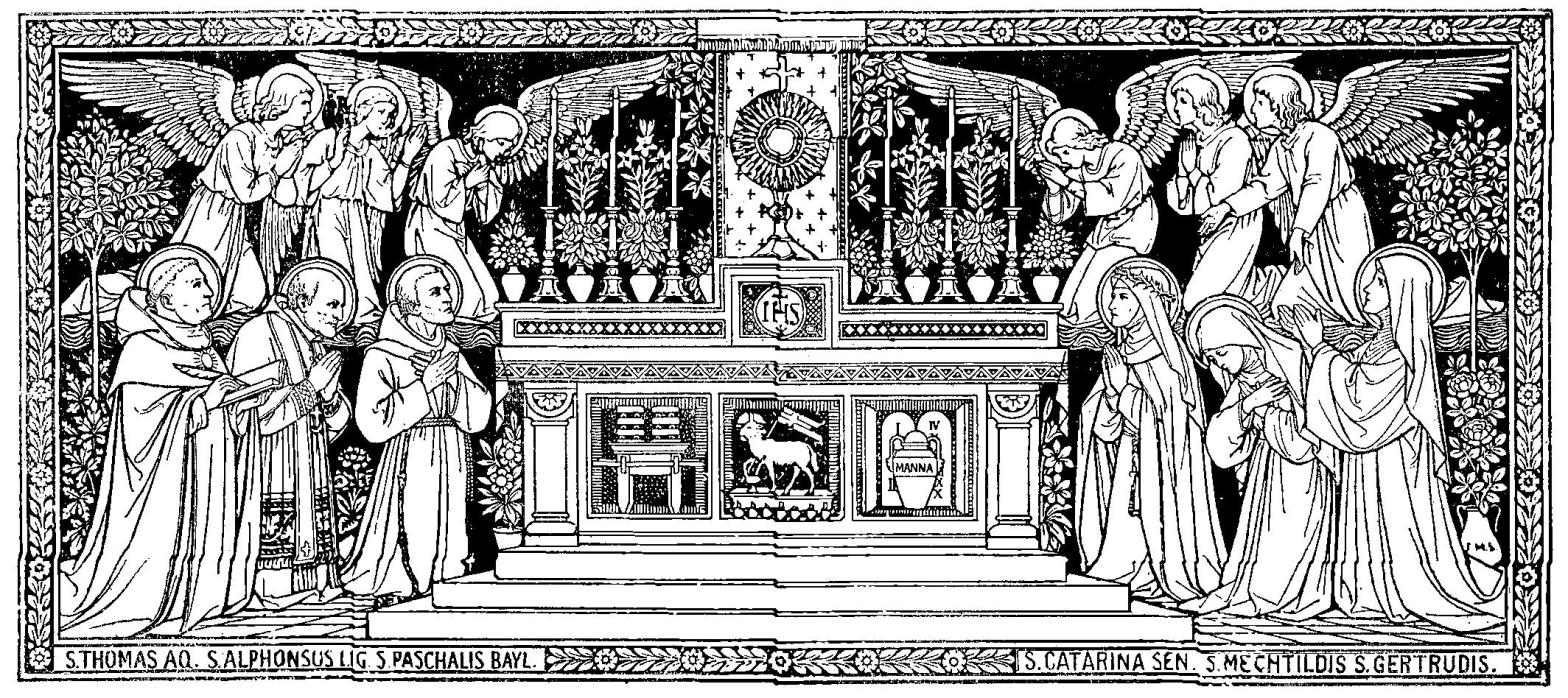
We human beings, we know that we are in need, and we have to go to the Lord because He is the only one who can help us. And we know that only the Lord could bring about a blessing at the depth that we need, the kind of healing that touches the very core of our being, the kind of blessing that speaks to the fulfillment of humanity. We fall off when we become transactional—when we ask the Lord for our needs, they’re granted, and then we forget about it. The natural human impulse to ask the Lord for our needs is arrested if it is not followed with thanksgiving. That thanksgiving is what solidifies the relationship, what ensures that we give back to God. It is what calls us to worship. That’s what you are doing at Mass, giving thanks to God. Eucharistia is a thanksgiving. You are giving back to God, in an imperfect way because we humans are imperfect, all of the blessings He’s given you. You pour yourself out at the Mass on the altar in thanksgiving. It’s beautiful that you are all here this morning, given that we find and know God through thanksgiving.
The last point I want to make this morning is what do we give Him thanks for? I’m finding when I spontaneously pray before meetings or with people, I almost always start now with thanksgiving. Thank you, Lord, for all of these things, and I’ve been more and more intentional about what am I thinking Him for. And I’ve realized every time I give thanks–and you might think about this at Thanksgiving dinner tonight—the first thing that I give thanks for is my salvation through our Lord Jesus Christ. It’s easy to give thanks for the material blessings. It’s easy to give thanks for things like economic prosperity, like security, like family, even health, if you’re blessed with that. But what is the most important gift you’ve ever been given? It is your salvation. It is the fact that sin and death no longer have power over you. It’s the fact that you have a promise and a guarantee that if you are faithful to Jesus Christ, you will spend all of eternity glorifying Him. That is an incredible gift. It is the greatest thing we could ever ask for. After we give thanks for our salvation, we give thanks for the means of that salvation. We give thanks for the Church through which we know truth, through which we have the sacraments, through which we have the tangible, touchable, receivable grace of Jesus Christ. We give thanks for our Christian community through which we find support in our faith—the support that’s more and more necessary as more and more people walk away from the faith. And then we give thanks, of course, for all of the other blessings in our life. We give thanks for our families, whether they are biological or chosen. We give thanks for the ability to serve, the ability to give back to this world, for our talents, for our charisms, oftentimes for our jobs, which can both be a means of making income and a means of serving society. We give thanks for all of the little things: the days of rest like today, the activities, the hobbies, the joys, the little things that make life so fulfilling and rich. Every act of thanksgiving—if it is offered to your Creator—will bring you into personal relationship with that Creator because it is a reminder that God knows you personally. He is with you personally, and the blessings that you receive were chosen for you personally.
 Fr. Moore