After rearranging the Stafford Room and Pastoral Center 1st Floor Conference Room, the staff has been on a little bit of a cleaning kick this week. In one instance, as she was making some incredible progress on one of our 2nd floor closets, Kathy found a stash of amices and chalice veils, both of which can (and, regarding the amice, often must) still be used in the liturgy but which have generally fallen out of use.
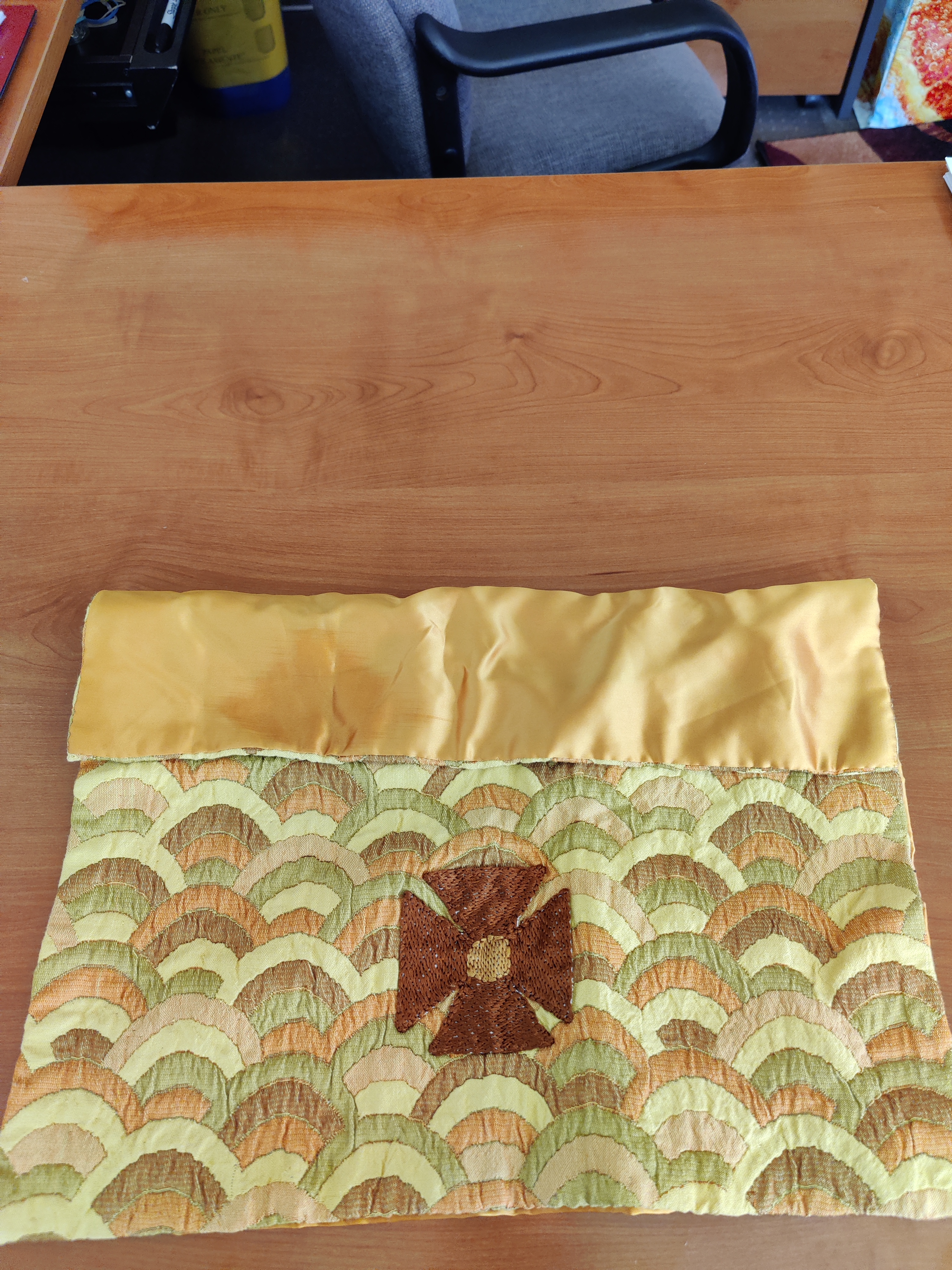
Of particular interest was one chalice veil, which did not have a proper liturgical color (maybe gold? or green?) and which was kind of puffier than the others. It felt very 1960s. This odd-man-out was fascinating because it represented something we would today think of as a contradiction in terms: chalice veils were abandoned by exactly the cultural era this veil purports to represent. It is like a Children of the World fiddleback (fake). Or, more realistically, it is like St. Joseph’s Parish in Lynden, which was built with and still retains a high altar (against the wall, with the priest facing the same direction as the people), even though the building itself is in a very 1960s style. I love studying liturgical books, buildings, and accoutrements from 1955 – 1965 because those years were struggling with heavy liturgical questions but did not think to throw everything out and start fresh (as a lot of people did immediately following the Vatican II). Seeing how they tried to resolve that tension, or expressed their cultural era even in old forms, can teach us a lot and give us plenty to think about.
 Fr. Moore
